 Morocco
UK Foreign Office travel advice · 19 August 2026
Current safety guidance for Morocco from UK Foreign Office travel advice. We cover 2 cities in Morocco, with reported scams for each.
Source: Morocco travel advice — UK Foreign Office travel advice
Contains public sector information licensed under the Open Government Licence v3.0.
Credit card fraud and scams are common. Beware of scammers substituting inferior goods for the ones you bought. Remain alert to potential confidence tricks.
It is common for people posing as official tourist guides to harass tourists.
If you use a guide in a historical district (medina quarter), make sure they have an official badge and permission from the local authority.
Be cautious if you travel to Morocco for a relationship or to find someone you met on the internet. Incidents of marriage fraud and attempted extortion have affected British nationals. Make sure you keep your return ticket, passport and personal belongings safe.
Many taxis booked through ride sharing applications may be unregulated and unlicensed. Travellers should therefore exercise caution and remain vigilant if using these applications. Drivers may not be registered with the authorities, and their vehicles may not be insured to carry passengers. The police may tell you to get out of an unlicensed taxi if they stop it. It is advisable to either agree a fare in advance or check the taxi is using a metre.
Drivers of ‘petits’ or ‘grands taxis’ sometimes speed and do not follow other driving rules, particularly in big cities. Exercise caution when using petit taxis, especially during late night journeys. Be aware that petit taxi drivers will often pick up other customers during the journey. Should you feel uncomfortable at any point, end the journey as soon as it is safe to do so and move to a well-lit area.
There is a high threat of terrorist attack globally affecting UK interests and British nationals, including from groups and individuals who view the UK and British nationals as targets. Stay aware of your surroundings at all times.
UK Counter Terrorism Policing has information and advice on staying safe abroad and what to do in the event of a terrorist attack. Find out how to reduce your risk from terrorism while abroad.
Terrorists are likely to try to carry out attacks in Morocco.
Terrorism attacks could be indiscriminate, including in places visited by foreign nationals, such as:
Stay aware of your surroundings, keep up to date with local media reports and follow advice of local authorities.
There is an increased threat linked to the number of Moroccans sympathetic or belonging to Daesh (formerly ISIL) and other extremist groups. Authorities regularly disrupt terrorist cells.
In some places, including hotels and tourists sites, there may be protective security measures, including security guards.
Protests and demonstrations could occur across the country, particularly in large cities, often without warning. These events are typically monitored closely by law enforcement. While authorised protests are generally peaceful, unauthorised ones have sometimes led to clashes between protesters and police. Such gatherings can cause travel disruption in the affected areas. Avoid political gatherings and demonstrations and follow local news and directions from security officials.
There can be occasional violent crime in Morocco. Criminals have used knives against tourists in street attacks, thefts and burglaries in major cities and along beaches. To reduce your risk:
Petty crime is common in tourist areas, especially in historical districts (medina quarters) and on beaches. Crimes include:
Be cautious when asking for directions and using ATMs – aggressive begging is common.
There have been deaths and cases of serious illness caused by alcoholic drinks containing methanol in Morocco.
Even small amounts of methanol can kill. It is not possible to identify methanol in alcoholic drinks by taste or smell. See Travel Aware Drink Spiking and methanol poisoning for information about how to reduce the risks.
Seek urgent medical attention if you or someone you are travelling with show the signs of methanol poisoning after drinking.
Morocco’s laws and customs are very different to those in the UK and reflect the fact that Morocco is an Islamic country. Always respect local traditions, customs, laws and religions. Make sure your actions do not offend, especially during the holy month of Ramadan or if you plan to visit religious areas.
Ramadan is a holy month for Muslims. The dates vary by year and country, next starting in February 2027. During this time, eating or drinking, swearing, smoking or chewing gum in public in the daytime may cause offence.
Get more advice when you arrive from your tour guide, hotel or business contacts, where applicable. You should also:
be patient and show tolerance
It is illegal to attempt to convert a Muslim to another faith and to distribute evangelical literature (such as Arabic-language bibles). Attempting to convert a Muslim to another faith can result in fines or up to 3 years’ imprisonment.
Public criticism of Islam, including in speeches, print or online media, can result in heavy fines and up 2 years’ imprisonment.
Sexual activity between unmarried people and adultery are illegal for Moroccan nationals – this includes sharing a hotel room, particularly with foreign nationals.
The law regarding unmarried people sharing a hotel room does not generally apply to visiting foreign nationals, particularly in popular tourist areas.
Avoid showing affection in public, particularly near religious sites as well as in tourist areas.
Using dating applications in Morocco may break laws relating to sexual relations outside of marriage. Be aware of the legal and personal safety risks when using these applications.
Same-sex sexual relations are illegal in Morocco. Showing affection in public can lead to prosecution. Meeting people through online applications, can carry legal, personal safety and privacy risks.
See more advice for LGBT+ travellers.
Alcohol is available in licensed venues. However, drinking alcohol in the street and anywhere other than a licensed restaurant or bar is illegal and can lead to arrest. Travellers should respect local laws and customs at all times.
Morocco has a zero-tolerance approach towards drugs. Possessing, using or trafficking illegal drugs, including cannabis, are serious offences and carry severe penalties.
You should expect a long jail sentence and heavy fines for these actions, including when transiting through the country. Airports in Morocco are equipped with technology and security for detecting items prohibited by customs controls, including for the baggage or transiting passengers. Do not accept items from strangers or leave your bags attended.
Women may receive unwanted attention in Morocco, especially when travelling alone. Consider wearing loose-fitting clothing which cover the arms, legs and chest. See advice for woman travellers abroad.
It is illegal to take photographs near sensitive political or military sites. Always ask permission before taking pictures of people, especially children.
It is illegal to possess pornographic material. This includes printed and digital material, and any type of material contrary to Moroccan laws related to morality and public order.
If you plan to bring a drone to Morocco, you must get permission from the Directorate General for Civil Aviation (in French) to fly a drone. If you do not, you risk fines and confiscation of your equipment.
If you are planning to drive in Morocco, see information on driving abroad.
You’ll need to have both the 1968 version of the international driving permit (IDP) and your UK driving licence with you in the car. You cannot buy an IDP outside the UK, so get one before you travel. Morocco no longer accepts the 1949 version of the IDP.
If you stay longer than one year, you need a Moroccan driving licence.
You must get a green card from your insurer and carry it with you to prove you have the minimum insurance cover in Morocco.
Hire car companies often have strict requirements for their customers, such as a year of driving experience and a higher minimum age.
Drink-driving is a serious offence in Morocco. If you are tested and found to have any alcohol in your system, you will get a fine and possible imprisonment.
Be more alert to other vehicles, pedestrians and animals as poor lighting can make it dangerous to drive at night. When weather conditions are poor, secondary routes and mountain roads can be especially hazardous. On motorways, be cautious of overloaded lorries and trucks overtaking when there is no hard shoulder.
Road accidents are a frequent occurrence in Morocco. If you’re involved in a road accident, complete a form (‘constat amiable’), to be signed by both parties. Blank forms are available from insurance company booths in Tangier Port and tobacconists in all cities.
If you are involved in a fatal road accident, and the Moroccan authorities think you’re responsible, they may detain you before a trial hearing.
The authorities will record your registration number when you drive into Morocco. If you’re not in the same vehicle when you try to leave the country, they will detain you and refuse to let you exit.
You’ll need to show evidence of motor insurance when entering and exiting the country. Always carry your insurance, licence and registration documents with you when driving.
When riding an electronic scooter or bike, wear a helmet and do not use headphones or earphones while riding. Be aware there are often no cycle lanes on roads.
Follow local laws and regulations and ensure you are aware of any requirements before using an electric scooter.
Providers of recreational and adventure tourism may not meet UK safety standards. Check safety standards with the tour operators or providers and make sure you are insured if you take part in activities such as water sports, boat tours or quad biking. Be aware that some insurance policies will not cover these activities. Book excursions for activities and water sports through reputable agents or at your hotel or resort.
If you’re planning to hike in the Atlas Mountains:
Quad bike accidents involving British nationals frequently occur in resort areas. Take the same precautions as you would in the UK. Safety standards vary considerably. Always wear a crash helmet.
Book hot air balloon trips only through licensed tour operators. Unlicensed providers may not meet required safety standards.
Many beaches in Morocco have limited or no lifeguard cover, and safety signage may be minimal. Strong currents and unexpected waves can occur. Take care when entering the water and avoid swimming in isolated areas. See water safety guidance if swimming.
Swimming in open water, including dams and rivers, can be dangerous. Deep mud and steep underwater slopes can trap people and lead to drowning.
Find out what you can do to prepare for and respond to extreme weather and natural hazards.
Earthquakes are a risk in Morocco. The last major earthquake, in 2023, killed almost 3,000 people. There are occasional minor earthquakes. Familiarise yourself with earthquake safety procedures and any instructions in hotel rooms.
In the event of an earthquake, stay away from walls, windows, trees, signs. It is safer to stand in open spaces or shelter under heavy furniture or in a door threshold. The US Federal Emergency Management Agency website has advice about what to do before, during and after an earthquake.
Heavy rain can cause flash flooding in some areas, particularly in the mountains or near rivers during winter months. Walking and driving can be dangerous in flooded areas. If you’re near a flood, monitor local media and follow instructions from local authorities.
There is a risk of wildfires during the summer season. Wildfires are highly dangerous and unpredictable. The situation can change quickly. Always follow the advice and instructions of the local authorities. Make sure cigarettes are properly extinguished, do not light barbecues and do not leave empty glass bottles behind.
This section has safety advice for regions of Morocco. It only covers regions where the Foreign, Commonwealth & Development Office (FCDO) has specific advice.
You should also read FCDO’s overall travel advice and safety and security advice.
Western Sahara is a disputed territory. If you’re in Western Sahara and need emergency help from the UK government, contact the British Embassy in Rabat, Morocco, who provide consular assistance for Western Sahara. See Western Sahara travel advice.
The authorities have closed land and sea borders between Morocco and Algeria. They patrol and closely monitor them. Do not attempt to cross the border – it is illegal to cross without authorisation.
If you are in a boat or jet ski, make sure you:
People entering Algerian waters illegally are likely to be intercepted and investigated.
 Crime and safety warnings for Nigeria
Current safety guidance for Nigeria from UK Foreign Office travel advice. We cover 1 city in Nigeria, with reported scams for each.
Crime and safety warnings for Nigeria
Current safety guidance for Nigeria from UK Foreign Office travel advice. We cover 1 city in Nigeria, with reported scams for each.
 Panama is at Level 2: exercise increased caution
Current safety guidance for Panama from US State Department travel advisories. We cover 1 city in Panama, with reported scams for each.
Panama is at Level 2: exercise increased caution
Current safety guidance for Panama from US State Department travel advisories. We cover 1 city in Panama, with reported scams for each.
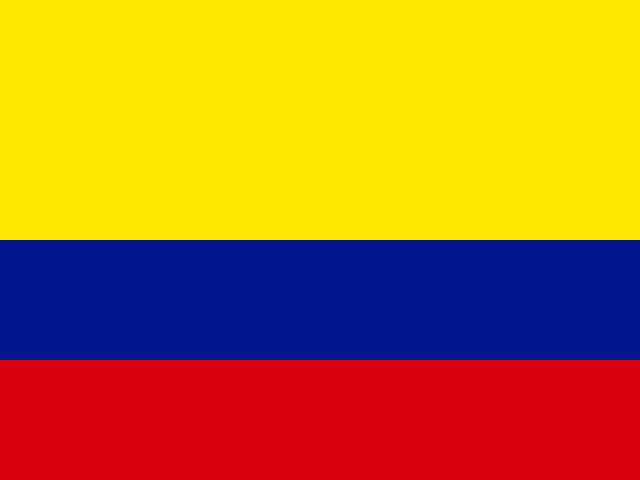 Crime and safety warnings for Colombia
Current safety guidance for Colombia from UK Foreign Office travel advice. We cover 3 cities in Colombia, with reported scams for each.
Crime and safety warnings for Colombia
Current safety guidance for Colombia from UK Foreign Office travel advice. We cover 3 cities in Colombia, with reported scams for each.
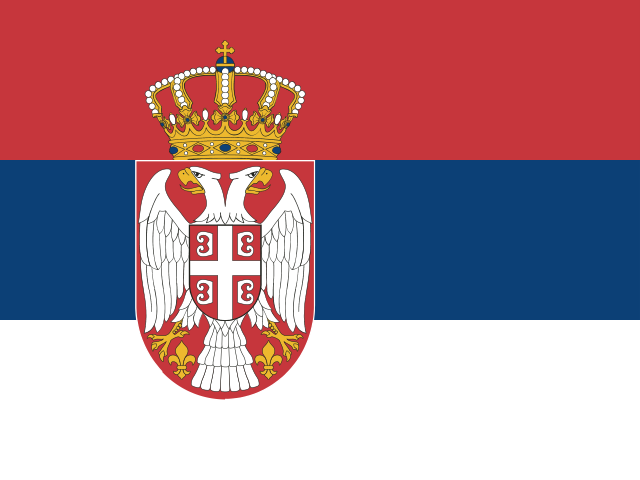 Crime and safety warnings for Serbia
Current safety guidance for Serbia from UK Foreign Office travel advice. We cover 1 city in Serbia, with reported scams for each.
Crime and safety warnings for Serbia
Current safety guidance for Serbia from UK Foreign Office travel advice. We cover 1 city in Serbia, with reported scams for each.
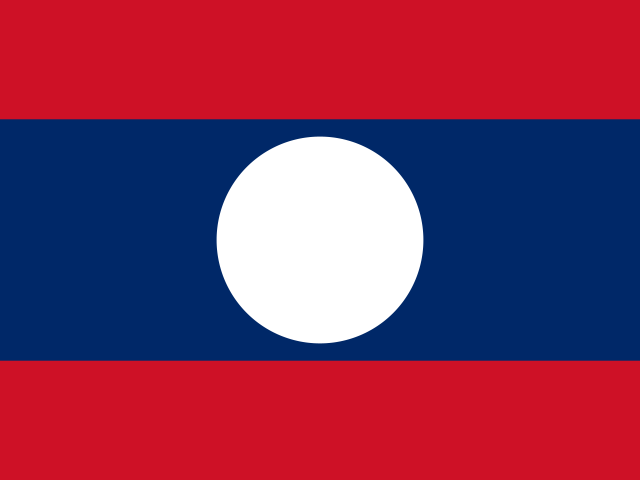 Crime and safety warnings for Laos
Current safety guidance for Laos from UK Foreign Office travel advice. We cover 1 city in Laos, with reported scams for each.
Crime and safety warnings for Laos
Current safety guidance for Laos from UK Foreign Office travel advice. We cover 1 city in Laos, with reported scams for each.
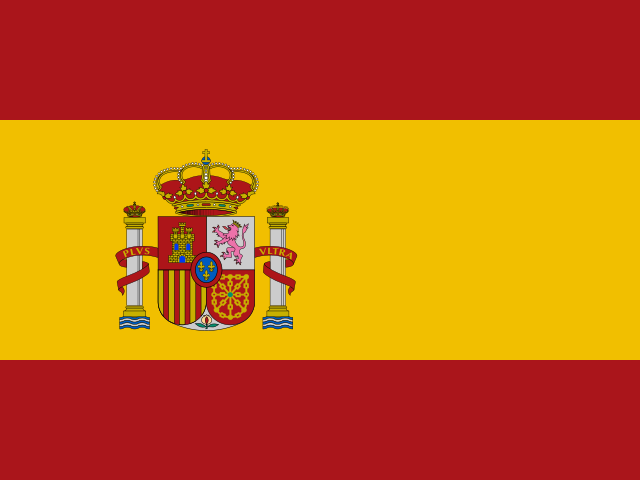 Crime and safety warnings for Spain
Current safety guidance for Spain from UK Foreign Office travel advice. We cover 2 cities in Spain, with reported scams for each.
Crime and safety warnings for Spain
Current safety guidance for Spain from UK Foreign Office travel advice. We cover 2 cities in Spain, with reported scams for each.