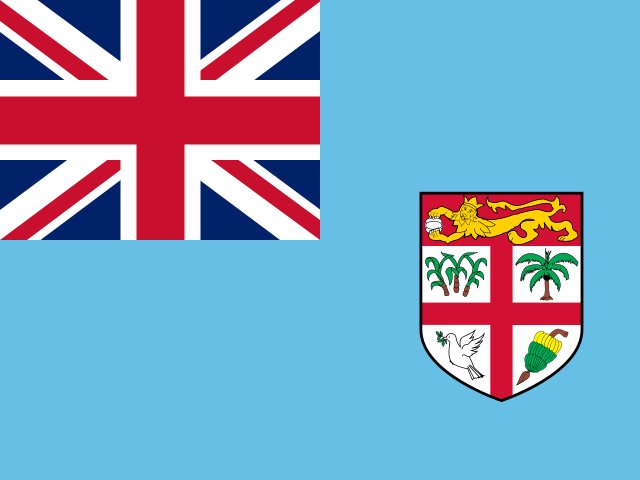
 Fiji
Fiji
UK Foreign Office travel advice · 10 August 2026
Current safety guidance for Fiji from UK Foreign Office travel advice. We cover 1 city in Fiji, with reported scams for each.
Source: Fiji travel advice — UK Foreign Office travel advice
Contains public sector information licensed under the Open Government Licence v3.0.
The risk of serious crime is generally low, but there are occasional incidents including sexual assault.
There has been an increase in cases of serious illness caused by alcoholic drinks containing methanol in popular travel destinations around the world.
Even small amounts of methanol can kill. It is not possible to identify methanol in alcoholic drinks by taste or smell. See Travel Aware Drink Spiking and Methanol Poisoning for information about how to reduce the risks.
Seek urgent medical attention if you or someone you are travelling with show the signs of methanol poisoning after drinking.
Be alert to the risk of credit card fraud. This may include credit card skimming devices or other types of data theft. Take care when paying with credit cards or withdrawing money from ATMs.
Kava is a traditional drink in Fiji used in kava ceremonies. If you’re invited to take part in a kava-drinking ceremony, be aware of the potential risks of liver toxicity.
Only use licensed taxis that have a yellow registration plate.
Not all minibuses are licensed. Only use those with yellow number plates. Unlicensed minibuses are frequently not insured.
There is a high threat of terrorist attack globally affecting UK interests and British nationals, including from groups and individuals who view the UK and British nationals as targets. Stay aware of your surroundings at all times.
UK Counter Terrorism Policing has information and advice on staying safe abroad and what to do in the event of a terrorist attack. Find out how to reduce your risk from terrorism while abroad.
Although there’s no recent history of terrorism in Fiji, attacks cannot be ruled out.
Protests can occur with little warning. Avoid demonstrations, rallies or street gatherings. Avoid any areas of obvious military or police activity.
Be careful of your belongings in cities and other popular tourist destinations. To reduce the risk:
Take additional care when walking at night in cities, towns and isolated areas, particularly if you are a woman travelling alone. There have been serious sexual assaults against foreign nationals in Fiji, including British women.
See advice for women travelling abroad.
Phone coverage in rural areas and outlying islands can be limited or non-existent. Many UK mobile phones do not work, as your provider may not have an international roaming agreement in Fiji.
You can buy a Fiji SIM card at Nadi International Airport and at convenience stores and supermarkets. You must register your SIM card if you buy it locally.
Possession of even small quantities of illegal drugs can lead to imprisonment and a large fine. Possession of any amount of marijuana carries a 3-month prison sentence.
Topless bathing and nudity in public is illegal. Cover your shoulders and knees in rural villages and during kava ceremonies.
Homosexuality was decriminalised in February 2010, but there can be local sensitivities, particularly when visiting rural communities.
Read more advice for LGBT+ travellers.
There are dangerous rip tides along reefs and river estuaries. Unless you have reliable local knowledge, swim from beaches that have lifeguards on duty and follow the flag warning system.
See water safety on holiday from the Royal Life Saving Society.
If you take part in any water activities, make sure you use a reputable, fully licensed company with up-to-date equipment and necessary safety features.
See watersports safety advice from the Royal Society for the Prevention of Accidents (ROSPA).
Diving schools may have limited resources and do not always observe safety and maintenance standards. Always:
ask to see a dive operator’s credentials and use schools with appropriate qualifications and credentials
check the conditions on your insurance policy – some policies require dive instructors to have certain qualifications
make sure safety equipment is in good condition
make sure oxygen is available on the boat
Make sure you know what to do if something goes wrong, including how to call for help while at sea.
There’s only one hyperbaric (recompression) chamber in Fiji, at the Colonial War Memorial Hospital in Suva. It is not always working. Check its status before scuba diving and get advice from your dive instructor or dive team. Make sure your insurance covers diving and medical evacuation costs.
Be aware of jellyfish and follow local advice.
If you are planning to drive in Fiji, see information on driving abroad.
You can use a UK driving licence to drive in Fiji.
Many roads in Fiji are in poor condition and can be dangerous. Roads are particularly hazardous at night due to a lack of street lighting and the chance of pedestrians or stray animals on the road. Avoid road travel outside of urban areas at night. Vehicle safety regulations are rarely enforced and driving standards are poor.
Severe weather can lead to roads becoming damaged, blocked or washed away. Seek local advice before you set out.
Check the boat operator’s credentials and safety equipment before boarding boats or vessels travelling between islands. Avoid any vessels that are overloaded as they are in danger of capsizing or sinking, particularly in poor weather conditions. Check to make sure there is adequate life-saving equipment for everyone on board in case of emergencies.
Find out what you can do to prepare for and respond to extreme weather and natural hazards.
Fiji is in an earthquake zone. There can be occasional tremors, which could trigger tsunami alerts. Make sure you understand the local safety procedures for earthquakes and tsunamis.
The US Federal Emergency Management Agency has advice about what to do before, during and after an earthquake or tsunami.
Tropical cyclone season normally runs from November to April, but cyclones occur throughout the year. During the cyclone season there is a greater risk of strong winds and heavy rain. Cyclones can cause flooding and landslides, often damaging or blocking roads and resulting in road closures.
Follow weather updates from Fiji Meteorological Service, local newspapers and Radio Fiji GOLD. The National Disaster Management Office has information on how to prepare.
 Crime and safety warnings for Morocco
Current safety guidance for Morocco from UK Foreign Office travel advice. We cover 2 cities in Morocco, with reported scams for each.
Crime and safety warnings for Morocco
Current safety guidance for Morocco from UK Foreign Office travel advice. We cover 2 cities in Morocco, with reported scams for each.
 Crime and safety warnings for Nigeria
Current safety guidance for Nigeria from UK Foreign Office travel advice. We cover 1 city in Nigeria, with reported scams for each.
Crime and safety warnings for Nigeria
Current safety guidance for Nigeria from UK Foreign Office travel advice. We cover 1 city in Nigeria, with reported scams for each.
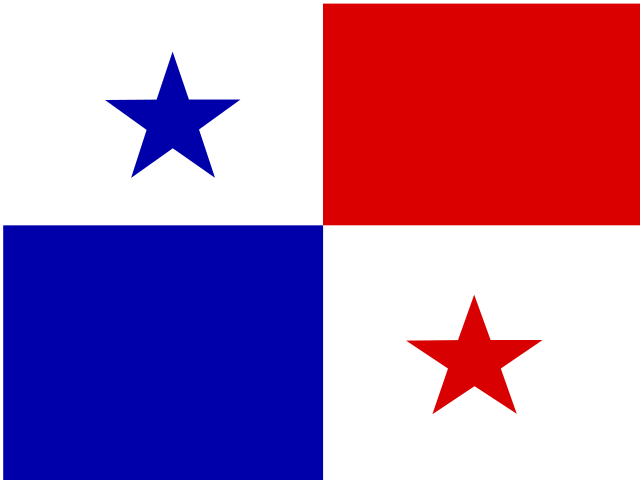 Panama is at Level 2: exercise increased caution
Current safety guidance for Panama from US State Department travel advisories. We cover 1 city in Panama, with reported scams for each.
Panama is at Level 2: exercise increased caution
Current safety guidance for Panama from US State Department travel advisories. We cover 1 city in Panama, with reported scams for each.
 Crime and safety warnings for Colombia
Current safety guidance for Colombia from UK Foreign Office travel advice. We cover 3 cities in Colombia, with reported scams for each.
Crime and safety warnings for Colombia
Current safety guidance for Colombia from UK Foreign Office travel advice. We cover 3 cities in Colombia, with reported scams for each.
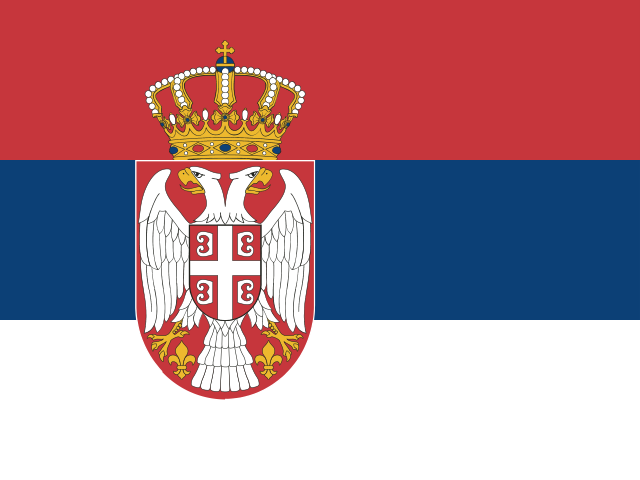 Crime and safety warnings for Serbia
Current safety guidance for Serbia from UK Foreign Office travel advice. We cover 1 city in Serbia, with reported scams for each.
Crime and safety warnings for Serbia
Current safety guidance for Serbia from UK Foreign Office travel advice. We cover 1 city in Serbia, with reported scams for each.
 Crime and safety warnings for Laos
Current safety guidance for Laos from UK Foreign Office travel advice. We cover 1 city in Laos, with reported scams for each.
Crime and safety warnings for Laos
Current safety guidance for Laos from UK Foreign Office travel advice. We cover 1 city in Laos, with reported scams for each.