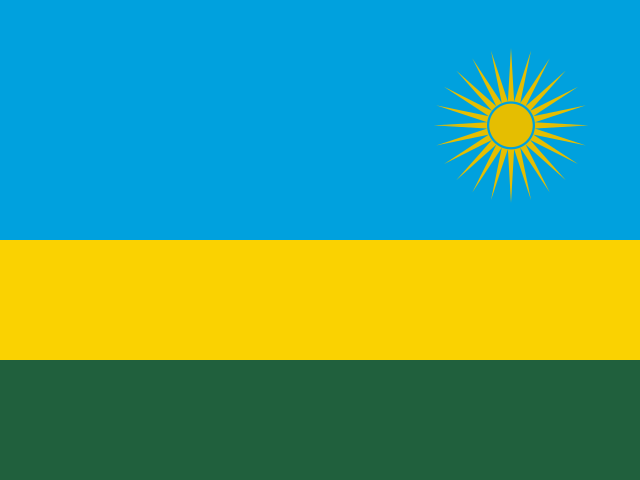
 Rwanda
UK Foreign Office travel advice · 10 June 2026
Current safety guidance for Rwanda from UK Foreign Office travel advice. We cover 1 city in Rwanda, with reported scams for each.
Source: Rwanda travel advice — UK Foreign Office travel advice
Contains public sector information licensed under the Open Government Licence v3.0.
This guide also has safety advice for regions of Rwanda.
There is a high threat of terrorist attack globally affecting UK interests and British nationals, including from groups and individuals who view the UK and British nationals as targets. Stay aware of your surroundings at all times.
UK Counter Terrorism Policing has information and advice on staying safe abroad and what to do in the event of a terrorist attack. Find out how to reduce your risk from terrorism while abroad.
Terrorist attacks in Rwanda cannot be ruled out.
Attacks could be indiscriminate including in places visited by foreigners. Stay aware of your surroundings, keep up to date with local media reports and follow the advice of local authorities.
Crime levels are relatively low in Rwanda, but there are cases of burglary, theft, bag-snatching and mugging (violent theft) in Kigali.
To reduce your personal risk:
Some off-limits military zones in Kigali may not be well lit or signposted. You could be arrested and detained if you enter these areas. Take extra care when walking around less populated zones, particularly at night.
There has been an increase in cases of serious illness caused by alcoholic drinks containing methanol in popular travel destinations around the world.
Even small amounts of methanol can kill. It is not possible to identify methanol in alcoholic drinks by taste or smell. See Travel Aware Drink Spiking and Methanol Poisoning for information about how to reduce the risks.
Seek urgent medical attention if you or someone you are travelling with show the signs of methanol poisoning after drinking.
Illegal drugs, including cannabis, carry severe penalties.
You should expect a long jail sentence and heavy fines for possessing, using or smuggling illegal drugs, including when transiting through the airport.
Airports in Rwanda have excellent technology and security for detecting illegal items. This is also used to scan the baggage of transiting passengers.
It is illegal to photograph some government buildings. If you use a drone to take photographs of a prohibited area without a permit, you risk being imprisoned or receiving a severe fine.
Consensual same-sex sexual acts are not illegal in Rwanda, but can be frowned upon by locals.
Rwanda’s laws do not discriminate against sexual orientation, and its constitution prohibits all forms of discrimination. Read more advice for LGBT+ travellers.
There is a ban on plastic bags in Rwanda for environmental reasons. If you have plastic bags when you arrive in the country, they will be confiscated.
The week following Genocide Memorial Day on 7 April is an official week of mourning.
The last Saturday of each month is Umuganda, a national day of community service. Most normal services close from 7am to 11am. Kigali also has a car-free morning from 7am to 10am on the first and third Sunday of the month to promote exercise and reduce car emissions. Other cities in the country may also hold car-free mornings. You should check with the local authorities as these might happen at different times.
If you plan to travel close to the Democratic Republic of the Congo border on a gorilla or chimpanzee trek, check travel advice for Rusizi District and the DRC border region. If you plan on crossing the border into DRC, check the travel advice for DRC. Short-notice border closures could impact any travel plans in the region. Plan your journey in advance and discuss your itinerary with your tour operator. Keep up to date with developments through your tour operator and check the local media.
If you are planning to drive in Rwanda, see information on driving abroad.
You’ll need to have both the 1949 version of the international driving permit (IDP) and your UK driving licence with you in the car. You cannot buy an IDP outside the UK, so get one before you travel.
After one year of driving, you must have a Rwandan licence. You should:
Roads from Kigali to all major towns are in good condition but can be damaged by landslides during the rainy season. After dark, many roads outside of larger urban centres are unlit and driving standards are poor.
Shared taxis (mini vans) and motorbike taxis are the most common form of public transport, but are very vulnerable to accidents.
Levels of building health and safety in Rwanda are lower than in the UK. Buildings and construction sites have collapsed, causing deaths and serious injuries.
Fire safety standards vary and fires in residential and public places are a continuing risk. Poor wiring and sub-standard electrical cables have caused building fires. Take extra care when using electronic equipment.
Find out what you can do to prepare for and respond to extreme weather and natural hazards.
The rainy season runs from February to May and from September to December. April is the height of the rainy season. Heavy storms can cause disruption and damage, including landslides and floods. Monitor local media reports and follow the advice of local authorities.
There is a risk of earthquakes in Rwanda. The US Federal Emergency Management Agency has advice about what to do before, during and after an earthquake. The US Geological Survey has a real-time earthquake map that captures information following significant seismic activity. If there is an earthquake, monitor local media reports and follow the advice of the authorities.
You should also read FCDO’s overall travel advice and safety and security advice.
See advice for the Rwanda-DRC border on the Warnings and insurance page.
Burundi closed the border to Rwanda in January 2024. There might be some tension near the border, as both sides have accused the other of cross-border raids targeting local inhabitants.
Border crossings Uganda have temporarily closed at short notice in recent years. Be aware of the impact that short-notice border closures could have on any travel plans in the region.
If you’re travelling near the DRC or Burundi borders, be aware of the risk of cross-border attacks and government security operations given the ongoing conflict in eastern DRC.
In recent years, armed incursions have occurred into south-west Rwanda:
 Crime and safety warnings for Morocco
Current safety guidance for Morocco from UK Foreign Office travel advice. We cover 2 cities in Morocco, with reported scams for each.
Crime and safety warnings for Morocco
Current safety guidance for Morocco from UK Foreign Office travel advice. We cover 2 cities in Morocco, with reported scams for each.
 Crime and safety warnings for Nigeria
Current safety guidance for Nigeria from UK Foreign Office travel advice. We cover 1 city in Nigeria, with reported scams for each.
Crime and safety warnings for Nigeria
Current safety guidance for Nigeria from UK Foreign Office travel advice. We cover 1 city in Nigeria, with reported scams for each.
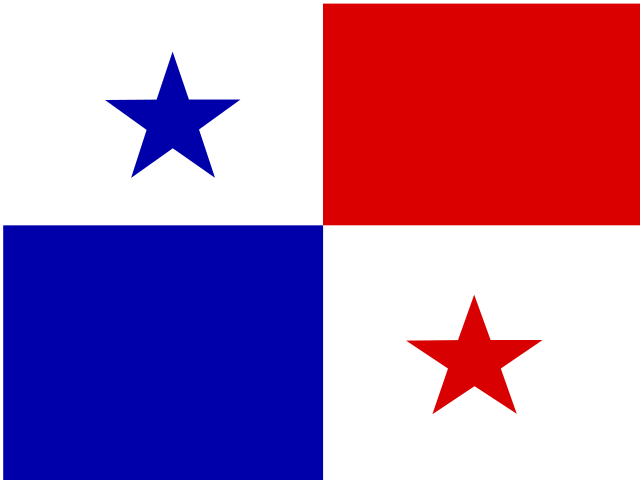 Panama is at Level 2: exercise increased caution
Current safety guidance for Panama from US State Department travel advisories. We cover 1 city in Panama, with reported scams for each.
Panama is at Level 2: exercise increased caution
Current safety guidance for Panama from US State Department travel advisories. We cover 1 city in Panama, with reported scams for each.
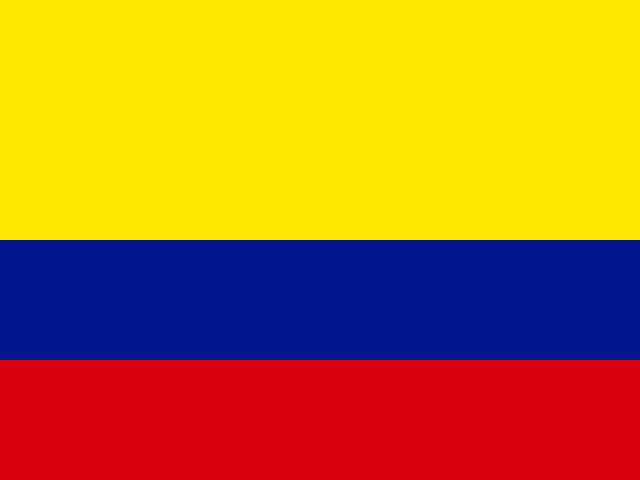 Crime and safety warnings for Colombia
Current safety guidance for Colombia from UK Foreign Office travel advice. We cover 3 cities in Colombia, with reported scams for each.
Crime and safety warnings for Colombia
Current safety guidance for Colombia from UK Foreign Office travel advice. We cover 3 cities in Colombia, with reported scams for each.
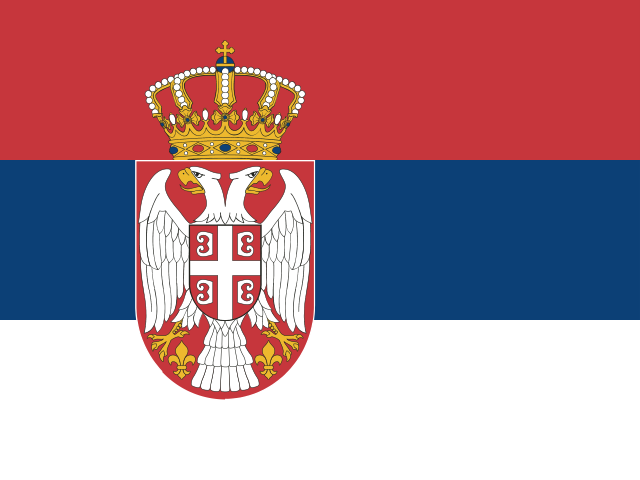 Crime and safety warnings for Serbia
Current safety guidance for Serbia from UK Foreign Office travel advice. We cover 1 city in Serbia, with reported scams for each.
Crime and safety warnings for Serbia
Current safety guidance for Serbia from UK Foreign Office travel advice. We cover 1 city in Serbia, with reported scams for each.
 Crime and safety warnings for Laos
Current safety guidance for Laos from UK Foreign Office travel advice. We cover 1 city in Laos, with reported scams for each.
Crime and safety warnings for Laos
Current safety guidance for Laos from UK Foreign Office travel advice. We cover 1 city in Laos, with reported scams for each.