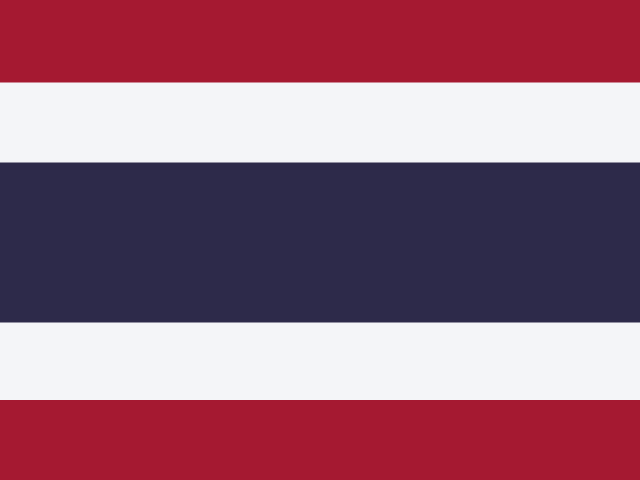
 Thailand
UK Foreign Office travel advice · 30 June 2026
Current safety guidance for Thailand from UK Foreign Office travel advice. We cover 5 cities in Thailand, with reported scams for each.
Source: Thailand travel advice — UK Foreign Office travel advice
Contains public sector information licensed under the Open Government Licence v3.0.
Violent crime, including gun crime, rarely involves tourists. However, several foreign nationals were victims of gun violence in Bangkok in 2018. Take care when travelling in unfamiliar areas and avoid walking through isolated areas alone, especially at night.
Drink spiking and drug-assisted sexual assault does happen in tourist areas around Thailand, with male and female victims. Do not leave your drinks unattended or accept drinks from strangers. Pre-arrange your transport home so you do not have to accept lifts in unlicensed vehicles.
Drinks served in bars are often stronger than those in the UK. Alcohol and drugs can make you less alert and more vulnerable to accidents, injuries, robbery and assaults.
Be aware of card fraud. Do not lose sight of your card during transactions. There have been incidents of ATM skimming. Use an ATM in a bank and always protect your PIN.
Be wary of job offers that appear too good to be true. People have arrived in Thailand and been illegally transported to neighbouring countries on the promise of high-paying jobs, which turn out to be scams. When you re-enter Thailand you may then be detained while your immigration status is validated.
There have been incidents of:
Thailand has strict laws on gambling. Under the Playing Cards Act (1943) it is illegal to carry over one hundred and twenty playing cards. Violation of the Act could lead to prosecution, a fine, or even imprisonment.
This guide also has safety advice for regions of Thailand.
There is a high threat of terrorist attack globally affecting UK interests and British nationals, including from groups and individuals who view the UK and British nationals as targets. Stay aware of your surroundings at all times.
UK Counter Terrorism Policing has information and advice on staying safe abroad and what to do in the event of a terrorist attack. Find out how to reduce your risk from terrorism while abroad.
Terrorists are likely to try to carry out attacks in Thailand.
There are regular terrorist attacks in the 4 provinces in the southern tip of Thailand by the border with Malaysia. The Foreign, Commonwealth & Development Office (FCDO) advises against all but essential travel to these provinces.
Martial law is in place in most areas in these provinces, which means security forces have greater security enforcement and investigative powers. See Regional risks.
However, terrorist attacks could take place anywhere in Thailand. Attacks could be indiscriminate, including in tourist destinations. Stay aware of your surroundings, keep up to date with local media reports and follow the advice of local authorities.
Targets might include:
The political situation can be unpredictable and has led to periods of civil and political unrest. Avoid protests, political gatherings, demonstrations and marches.
To reduce your personal risk:
Do not hand your passport over as a guarantee, for example to motorcycle or jet-ski rental businesses. Companies may hold on to passports against claimed damage.
Violent sexual assaults and unprovoked attacks can happen in tourist areas across Thailand. Attacks are most common during full moon parties or similar events, and near bars late at night.
There have been deaths and cases of serious illness caused by alcoholic drinks containing methanol in Thailand.
Even small amounts of methanol can kill. It is not possible to identify methanol in alcoholic drinks by taste or smell. See Travel Aware Spiking and methanol poisoning for information about how to reduce the risks.
Seek urgent medical attention if you or someone you are travelling with show the signs of methanol poisoning after drinking.
The British Embassy in Bangkok’s video talks about what to be aware of when living or travelling in Thailand:
Criticising the Thai monarchy (‘lèse-majesté’) is illegal. The law can be interpreted broadly and carries a long prison sentence. British and Thai journalists, human rights defenders and members of the public have faced charges for making political comments or sharing articles online that could be interpreted as being negative towards the institution of the Thai monarchy. The law also covers any accusations about members of the Thai Royal Family, past and present.
Posting images of people drinking alcohol or wearing clothing considered inappropriate can be illegal. Both the person who uploaded the images and the people in them could be fined or imprisoned.
Buying property in Thailand is not straightforward. Make sure you understand local laws and consult a lawyer before making financial commitments. British people have been victims of property scams.
It is illegal to fly a drone in Thailand if it is not registered. You must register your drone with Thailand’s National Broadcasting and Telecommunications Commission (NBTC) within 30 days of entering Thailand or purchasing a drone in Thailand even if you do not intend to fly it.
The regulations apply to all drones, including those for recreational use. The fine for an unregistered drone with the NBTC is 100,000 baht or five years imprisonment or both.
Police may ask to check your passport. If you do not have it with you, you could be asked to produce it within 24 hours at a police station. Usually, a copy of the photo page of your passport will be sufficient.
It’s illegal to smoke in public with a fine of up to 5,000 Thai baht. It is illegal to possess or use any vape, e-cigarette, pod, e-liquid, or heat-not-burn device in Thailand. Offences can lead to confiscation, heavy fines (typically 5,000–30,000 Thai bhat), detention, and court proceedings. You may be required to remain in Thailand until the case has been finalised. There are no exceptions for tourists or for personal use.
The sale of alcohol is restricted between midnight and 11am. This does not apply to licensed hotels, international airport terminals or authorised entertainment venues. Exercise caution when purchasing or consuming alcohol in public places during restricted hours and check with venue owners or shop sellers. Failure to comply could result in a fine.
Thailand has strict laws against drug use, possession and trafficking. Possessing small quantities of illegal substances can lead to heavy fines or imprisonment. Possessing Class A drugs can lead to the death penalty.
Conditions in prisons and other detention facilities in Thailand are harsh, with limited access to healthcare. Detainees have died in custody.
Some British nationals have suffered severe psychiatric problems because of drug use, sometimes leading to suicide.
Cannabis laws in Thailand are strictly enforced and have changed in recent years. You must follow local regulations on possession, use and export.
Cannabis use in Thailand is restricted to medical purposes only. You must not buy, possess or use it without a Thai-issued medical prescription, which is limited to a 30-day supply. Recreational use remains illegal.
It is illegal to take cannabis out of Thailand without the appropriate export permission from the authorities.
Attempting to take cannabis out of Thailand will result in penalties, including fines starting at 30,000 Thai baht per kilogram (about £684 per kg). If you do not pay, you will be detained or imprisoned. You will also be placed on an immigration watchlist affecting future travel to Thailand.
Cannabis is illegal in many countries. If you carry it when arriving in, or transiting through, another country, you risk arrest and serious penalties, including long prison sentences.
Thailand is generally a safe place for LGBT+ travellers. Thailand legalised same-sex marriage in January 2025. Read more advice for LGBT+ travellers.
It’s illegal to buy, sell, kill or capture any protected wild animal or trade its parts without a licence.
Elephant treks can be dangerous, especially if elephants are mistreated or not handled properly. Use a reliable, licensed tour guide. British nationals have been seriously injured and killed because handlers have lost control of the elephant.
Take care when swimming off coastal areas, especially during monsoon season. People have drowned in strong riptides. Thailand has lifeguards on duty at designated beaches and operates a flag system for safe swimming. Follow all warning signs, especially red flags.
See water safety on holiday from the Royal Life Saving Society.
Jellyfish can swim close to the shore, particularly during the rainy season from May to October. Jellyfish stings can be fatal. Take local advice from your hotel and dive centres.
Take care when swimming, diving, kayaking or white water rafting in rivers or close to waterfalls, particularly in the rainy season. Currents can be extremely strong.
See watersports safety advice from the Royal Society for the Prevention of Accidents (ROSPA).
Diving schools may have limited resources and do not always observe safety and maintenance standards. Always:
If you have not had any previous diving experience, check what to do if something goes wrong, including how to call for help while at sea.
Thailand has a high number of road traffic accidents, particularly with motorcycles. The World Health Organisation (WHO) ranks Thailand as one of the world’s deadliest countries for fatalities on motorcycles.
If you are planning to drive in Thailand, see information on driving abroad. You’ll need to carry both the 1968 version of the international driving permit (IDP) and your UK driving licence while driving. You cannot buy an IDP outside the UK, so get one before you travel.
If you live in Thailand, you can apply for a Thai driving licence using your UK driving licence.
Motorcycles and scooters for hire in tourist areas are often unregistered and cannot be used legally on a public road. Before you hire a vehicle, make sure your travel insurance covers you and check the small print of the lease agreement, paying particular attention to any limits on engine size and necessary licenses. Many travel insurance policies expect you to hold the correct UK licence for the type of car, motorbike or scooter you intend to drive abroad. This means that if you wouldn’t be legally permitted to drive it in the UK, your insurer may not cover you for driving it in Thailand.
By law, you must wear a helmet when riding a motorcycle.
If you drive a car or ride a motorcycle in Thailand without a valid licence, it could invalidate your travel insurance and you’ll be unable to claim if you have an accident or injury.
Nok Air has been suspended from operating international flights due to safety concerns by Thailand’s Civil Aviation Authority, though still operates domestically within Thailand.
There are many passenger boat services operating between the mainland and islands. Boats can sink or collide, which has led to fatalities, including of British nationals. Accidents are usually due to:
Find out what you can do to prepare for and respond to extreme weather and natural hazards.
The rainy season is generally from May to October. In Koh Samui and the south-east of Thailand it is from November to March. However, the rainy season has been more unpredictable recently.
Heavy storms cause disruption including flooding and landslides. Lakes, caves and waterfalls are particularly at risk of dangerous flash flooding.
Follow the Thai Meteorological Department for weather warnings.
Earthquakes and tremors are a risk in northern Thailand. Earthquake Track lists recent activity.
The US Federal Emergency Management Agency website has advice about what to do before, during and after an earthquake.
This section has safety advice for regions of Thailand. It only covers regions where FCDO has specific advice.
You should also read FCDO’s overall travel advice and safety and security advice.
FCDO advises against all but essential travel to parts of the south, near the Thailand-Malaysia border:
FCDO also advises against all but essential travel on the Hat Yai to Padang Besar train line that runs through these provinces.
This is due to regular attacks in the provinces by the border with Malaysia. See Safety and security .
In July 2025, Thailand and Cambodia fought along parts of the border. The fighting included the use of rocket and artillery fire. Tensions remain and fighting erupted again at various points along the border in early December. Land borders and crossings between Thailand and Cambodia continue to be suspended. Some tourist destinations in border areas such as the Khao Phra Wihan/Preah Vihear temple, the Ta Kwai/Ta Krabey temple and the Ta Muen Thom/Tamone Thom temple are closed.
There are also unexploded landmines in the border area.
FCDO advises against all but essential travel to within 20km of the land border with Cambodia.
Not all land border crossings into Laos are open to foreign nationals. Even if the border crossing is open, you may need to get a visa for Laos in advance. Check the entry requirements in the Laos travel advice. Follow the instructions of local authorities and be vigilant in the border areas.
The security situation in Myanmar is unpredictable and liable to change without notice. See Myanmar travel advice.
 Crime and safety warnings for Morocco
Current safety guidance for Morocco from UK Foreign Office travel advice. We cover 2 cities in Morocco, with reported scams for each.
Crime and safety warnings for Morocco
Current safety guidance for Morocco from UK Foreign Office travel advice. We cover 2 cities in Morocco, with reported scams for each.
 Crime and safety warnings for Nigeria
Current safety guidance for Nigeria from UK Foreign Office travel advice. We cover 1 city in Nigeria, with reported scams for each.
Crime and safety warnings for Nigeria
Current safety guidance for Nigeria from UK Foreign Office travel advice. We cover 1 city in Nigeria, with reported scams for each.
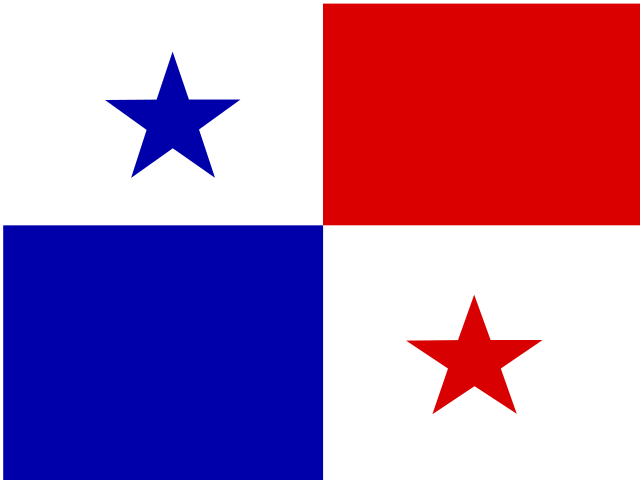 Panama is at Level 2: exercise increased caution
Current safety guidance for Panama from US State Department travel advisories. We cover 1 city in Panama, with reported scams for each.
Panama is at Level 2: exercise increased caution
Current safety guidance for Panama from US State Department travel advisories. We cover 1 city in Panama, with reported scams for each.
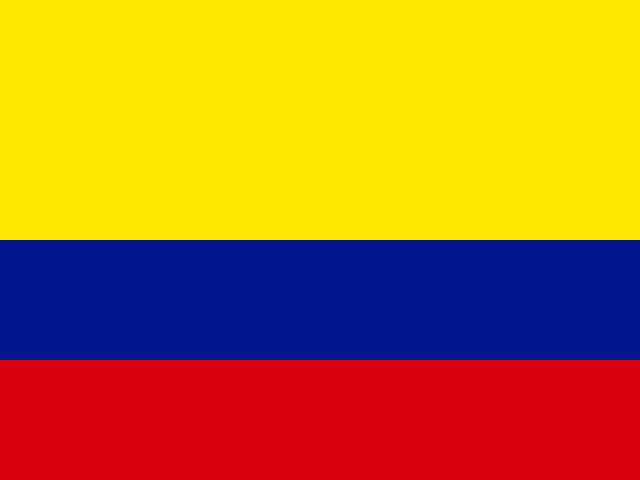 Crime and safety warnings for Colombia
Current safety guidance for Colombia from UK Foreign Office travel advice. We cover 3 cities in Colombia, with reported scams for each.
Crime and safety warnings for Colombia
Current safety guidance for Colombia from UK Foreign Office travel advice. We cover 3 cities in Colombia, with reported scams for each.
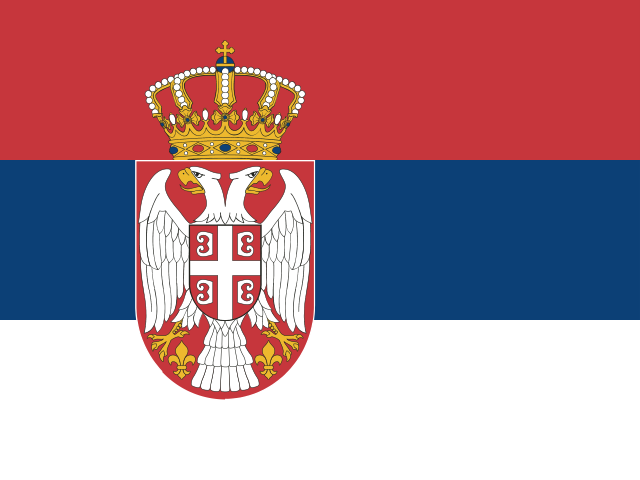 Crime and safety warnings for Serbia
Current safety guidance for Serbia from UK Foreign Office travel advice. We cover 1 city in Serbia, with reported scams for each.
Crime and safety warnings for Serbia
Current safety guidance for Serbia from UK Foreign Office travel advice. We cover 1 city in Serbia, with reported scams for each.
 Crime and safety warnings for Laos
Current safety guidance for Laos from UK Foreign Office travel advice. We cover 1 city in Laos, with reported scams for each.
Crime and safety warnings for Laos
Current safety guidance for Laos from UK Foreign Office travel advice. We cover 1 city in Laos, with reported scams for each.