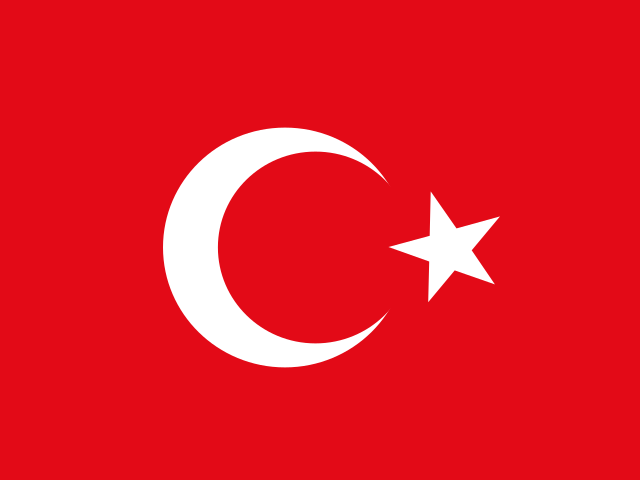
 Turkey
UK Foreign Office travel advice · 22 July 2026
Current safety guidance for Turkey from UK Foreign Office travel advice. We cover 3 cities in Turkey, with reported scams for each.
Source: Turkey travel advice — UK Foreign Office travel advice
Contains public sector information licensed under the Open Government Licence v3.0.
Be wary of strangers approaching you to change money, or to take you to a restaurant or nightclub. If strangers offer you food and drink these could be spiked. Buy your own drinks and always keep sight of them.
Accepting lifts from drivers of unofficial taxis is highly risky. Find a registered taxi, note the registration number before entering and ensure the fare is metered. App-based taxis and pre-booked taxis are also widely available.
This guide also has safety advice for regions of Turkey.
There is a high threat of terrorist attack globally affecting UK interests and British nationals, including from groups and individuals who view the UK and British nationals as targets. Stay aware of your surroundings at all times.
UK Counter Terrorism Policing has information and advice on staying safe abroad and what to do in the event of a terrorist attack. Find out how to reduce your risk from terrorism while abroad.
Terrorists are likely to try to carry out attacks in Turkey.
Most terrorist attacks have occurred in southeast Turkey, Ankara and Istanbul. You should remain aware of your surroundings, keep up to date with local media reports and follow the advice of local authorities.
See Regional risks for details about the areas in south-east Turkey where FCDO advises against travel.
There have been several attacks involving knives, firearms and explosives. Attacks could be indiscriminate including in places visited by foreign nationals, such as:
Examples of recent attacks include:
Extremist groups based in Syria, including Daesh and Al-Qaeda linked groups, have the capacity to carry out attacks in Turkey. Daesh has previously targeted border crossings and nearby locations on the Syrian side of the border.
Regular demonstrations and protests are currently taking place in Istanbul and other cities across Turkey. Demonstrations may become violent. The police response has included use of tear gas and water cannons.
Events in Israel and Palestine have led to heightened tensions in the region and in locations across Turkey. Demonstrations continue to occur outside diplomatic missions connected to the conflict in major cities, particularly Israeli diplomatic missions in Ankara and Istanbul.
Avoid all demonstrations and leave the area if one develops. Local transport routes may be disrupted.
Street robbery and pickpocketing are common in the major tourist areas of Istanbul. Be aware of your personal belongings and make sure they are always secure.
Banks and money exchanges may not accept 50 or 100 US dollar bills, due to a reported surge in counterfeit banknotes of these denominations in Turkey. You should not accept these banknotes where possible.
There has been an increase in cases of serious illness caused by alcoholic drinks containing methanol in popular travel destinations around the world.
In Turkey, including Ankara and Istanbul, people have died or suffered serious illness after drinking illegally produced local spirits and counterfeit bottles of branded alcohol.
Even small amounts of methanol can kill. It is not possible to identify methanol in alcoholic drinks by taste or smell. See Travel Aware Drink Spiking and methanol poisoning for information about how to reduce the risks.
Seek urgent medical attention if you or someone you are travelling with show the signs of methanol poisoning after drinking.
Among the 4.27 million British travellers that visited Turkey in 2025, 29 cases of sexual assault, including rape, were reported to British consular staff. The majority of cases that have been reported took place during the tourist season in coastal resort areas. Often these crimes were committed by someone the victim may have met during the day, with a significant number being by hotel or spa staff. There have also been sexual attacks on minors visiting toilet facilities alone. Be extra vigilant in these situations.
Take extra precautions:
See advice for women travelling abroad and information for British nationals affected by rape or sexual assault abroad
If you experience sexual harassment or assault, or if you feel threatened or unsafe, report it as soon as possible to the hotel and to the Turkish police or gendarmerie. Call 112 for police. Contact your nearest British Consulate for Consular support.
Access to some e-sim services is restricted in Turkey. Check with your provider before travelling.
Ramadan is a holy month for Muslims in Turkey. The next Ramadan will likely begin between early February and early March in 2027 and will last for 29 or 30 days. Get more advice when you arrive from your tour guide, hotel or business contacts.
During this time, it may cause offence if you:
eat, drink, smoke or chew gum in public in the daytime, including in your car
play loud music or dance
swear in public
You should also:
check opening hours of shops and restaurants
be aware that if hotels and restaurants are providing food or drink in fasting hours, they may separate you from Islamic guests, for example with screens
follow local dress codes – clothing that does not meet local dress codes may cause more offence at this time
be aware that driving may be erratic, particularly when people are trying to get home at dusk
be patient and show tolerance – fasting can cause tiredness, particularly during the late afternoon and early evening
It is illegal not to carry some form of photographic ID in Turkey. Always carry your passport or residence permit. In some busy areas, especially Istanbul, the authorities may stop people for ID checks. There are also several police checkpoints on main roads across Turkey. Cooperate with officials conducting checks.
There are some reports of hotels refusing to check-in children aged 17 and under who are not accompanied by a parent or guardian, unless written parental consent has been provided (and in some cases notarised). Check with your accommodation provider in advance.
Dress modestly if you’re visiting a mosque or a religious shrine to avoid causing offence.
There are reports of tourists being encouraged to submit a claim for personal injury if they have experienced gastric illness in Turkey. Find out what you can do if you have suffered a personal injury on the Citizens Advice website. Only make a claim if you have genuinely suffered from injury or illness. If you make a false or fraudulent claim, you may face legal proceedings in the UK or Turkey.
Smoking is illegal on public transport and in all indoor workplaces and public places. Smoking is restricted in some outdoor areas where cultural, artistic, sports or entertainment activities are held.
Illegal drugs, including cannabis, carry severe penalties. You should expect a long prison sentence of 4 to 24 years and heavy fines for possessing, using or smuggling illegal drugs, including when transiting through airports.
Airports in Turkey have excellent technology and security for detecting illegal items. This is also used to scan the baggage of transiting passengers.
Most towns and cities have stray dogs. Packs congregate in parks and wastelands and can be aggressive. Take care and do not approach stray dogs. If you’re bitten, get medical advice immediately. Rabies and other animal borne diseases are present in Turkey.
Buying or exporting antiquities is illegal. You could be fined and receive a prison sentence of 5 to 12 years. Some historical items found at local markets and in antique shops can be sold within Turkey but are illegal to export. Confirm the status of antique items before you buy them.
Do not take photographs of or near military or official installations. Ask for permission before photographing people.
Same-sex sexual activity is legal in Turkey. However, many parts of Turkey are socially conservative and showing affection in public could receive unwelcome attention. Read more advice for LGBT+ travellers.
It is illegal to insult the Turkish nation or the national flag. These laws can also apply to comments or images online no matter where you were or when you posted them. Defacing Turkish banknotes is also illegal. Offences under these laws are punishable by a prison sentence of between 6 months and 3 years.
If you do an extreme sport, check that adequate safety precautions are in place. British nationals have been injured and killed doing extreme sports. Only use reputable operators. Make sure you are given full instructions and training before your activity. Make sure your travel insurance covers you for all activities you do. Always read the details of your insurance cover, especially the small print and exclusions on your policy.
Paragliding is an extreme sport and carries the risk of serious injury or death. British nationals have died or been seriously injured whilst paragliding in Turkey.
Make sure you are given full instructions and training before your activity.
If you are near where paragliding activities take place, be aware that the landing area may be in a public area. Keep a reasonable distance from potential landing zones for your personal safety.
Quad biking is an extreme sport and carries the risk of serious injury or death. You need specific travel insurance to cover quad biking. Always read the details of your insurance cover, especially the small print and exclusions on your policy.
Make sure you are given full instructions and training before your activity.
Insurance sold by the hire company usually only provides third party insurance. It’s likely you will be charged for any damage to the rental vehicle and you may face arrest if you do not pay.
If you hire a moped you need a valid driving licence with at least category A1 - ‘light motorcycle’. Make sure the vehicle is in good condition. Drivers and passengers must wear helmets. Failure to do so may invalidate your insurance. If police stop you, they will fine you and take your licence.
Jeep safaris can be dangerous - there have been a number of reported accidents in recent years. If you join a jeep safari, use a reputable company who have adequate health and safety procedures and equipment. Always check that activities are covered by your insurance.
Book activities at a licensed water sports centre and before you start:
Every year, people drown in the sea and in swimming pools in Turkey. Always supervise children, even if they can swim or there is a lifeguard present.
Take care when swimming in the sea. Some beaches may have strong undercurrents.
Hidden rocks or shallow depths can cause serious injury or death. Do not dive into unknown water.
Follow local advice if jellyfish or urchins are present. See further information on the Turkish Marine Research Foundation’s page.
Many beaches have a flag system. Make sure you understand the system and follow any warnings (a red flag means you must not enter the water). Follow instructions from lifeguards. Take extra care and seek local advice if there are no lifeguards, flags, or signs.
See further tips on ABTA’s swim safe pages and Water Safety on Holiday from the Royal Life Saving Society.
If you are planning to drive in Turkey, see information on driving abroad.
You need a 1968 international driving permit (IDP) or a UK driving licence notarised in Turkish to drive in Turkey. The 1949 IDP is not accepted any more. You cannot buy an IDP outside the UK, so get one before you travel. You must also carry a green card to show you have third party insurance.
If you bring a vehicle registered in another country into Turkey, observe the Turkish customs regulations. Check if you need a UK sticker to drive your car outside the UK.
Take care when travelling by road, particularly at night. Approach checkpoints slowly and follow the instructions of security personnel. Roads between major cities are generally in excellent condition, but the road surface can be poor in remote areas. Accidents are common – mainly due to poor or reckless driving.
It is illegal to ride without a helmet on motorcycles and mopeds. You may get a severe fine if you are not wearing a helmet.
Do not drink and drive. The police fine drunk drivers and they could confiscate your licence for 6 months.
Find out what you can do to prepare for and respond to extreme weather and natural hazards.
Many parts of Turkey regularly experience earthquakes and tremors. These can be high magnitude, cause damage to infrastructure, and pose a risk to life.
A 6.2-magnitude earthquake which occurred in the Sea of Marmara in April 2025, was felt strongly in Istanbul. Be aware of the risk of aftershocks. See Turkey’s Disaster and Emergency Management Authority’s (AFAD) earthquake page for the latest information about seismic activity in Turkey.
Follow advice from local authorities, tour operators and accommodation providers. See the US Federal Emergency Management Agency guidance about what to do before, during and after an earthquake.
Extreme temperatures can affect many areas of Turkey over the summer months.
The NHS has information on how to cope in hot weather.
Wildfires happen frequently in Turkey during summer.
You could get a fine or prison sentence for lighting a fire of any kind or discarding cigarettes in risk areas such as woodland. Look out for signs that tell you fires, barbeques, and smoking are prohibited.
If there is a wildfire in your area, local authorities may tell you to leave your accommodation. Follow the directions of local authorities.
If you see a wildfire, call emergency services on 112.
Severe rainstorms can cause flooding and landslides across Turkey, damaging roads and bridges. Some routes may become impassable, making it difficult to travel and reducing essential services.
If you’re in an affected area:
This section has safety advice for regions of Turkey. It only covers regions where FCDO has specific advice.
You should also read FCDO’s overall travel advice.
FCDO advises against all travel within 10km of the Turkey-Syria border.
Fighting in Syria continues in areas close to the Turkish border and there is a heightened risk of terrorism in the region. See Terrorism.
Due to the ongoing conflict in Syria, roads in Hatay Province leading towards the border may be closed at short notice.
In Hakkari province you must get permission from the local Governor’s Office to visit areas near the border with Iraq and Iran. If visiting with a travel agent or tour group, confirm with them whether you need an individual permit. Keep up to date with local media and follow the advice of the local authorities.
Mount Ararat, in Ağrı Province, is a special military zone. You must have permission from the Doğubayazıt government office and pay a fee. If visiting with a travel agent or tour group, confirm with them whether you need an individual permit.
Take extra care if you’re travelling to this area. Keep up to date with local media and follow the advice of the local authorities.
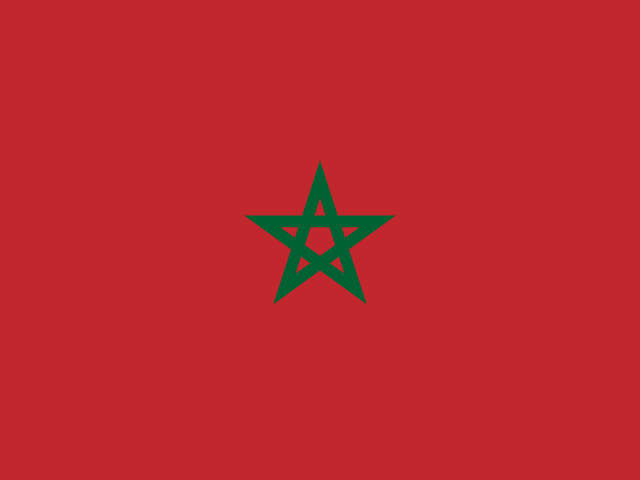 Crime and safety warnings for Morocco
Current safety guidance for Morocco from UK Foreign Office travel advice. We cover 2 cities in Morocco, with reported scams for each.
Crime and safety warnings for Morocco
Current safety guidance for Morocco from UK Foreign Office travel advice. We cover 2 cities in Morocco, with reported scams for each.
 Crime and safety warnings for Nigeria
Current safety guidance for Nigeria from UK Foreign Office travel advice. We cover 1 city in Nigeria, with reported scams for each.
Crime and safety warnings for Nigeria
Current safety guidance for Nigeria from UK Foreign Office travel advice. We cover 1 city in Nigeria, with reported scams for each.
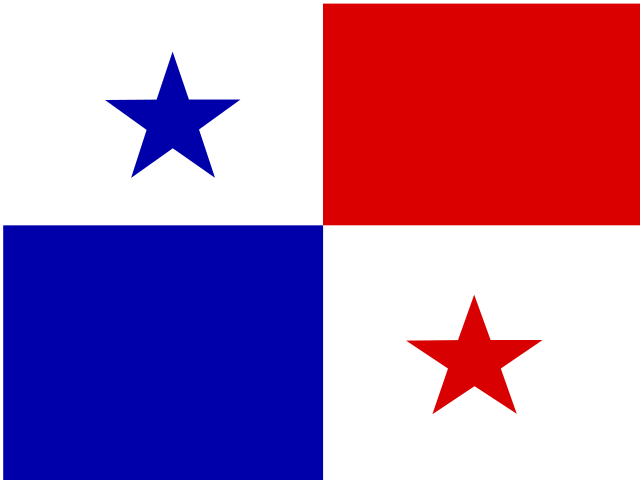 Panama is at Level 2: exercise increased caution
Current safety guidance for Panama from US State Department travel advisories. We cover 1 city in Panama, with reported scams for each.
Panama is at Level 2: exercise increased caution
Current safety guidance for Panama from US State Department travel advisories. We cover 1 city in Panama, with reported scams for each.
 Crime and safety warnings for Colombia
Current safety guidance for Colombia from UK Foreign Office travel advice. We cover 3 cities in Colombia, with reported scams for each.
Crime and safety warnings for Colombia
Current safety guidance for Colombia from UK Foreign Office travel advice. We cover 3 cities in Colombia, with reported scams for each.
 Crime and safety warnings for Serbia
Current safety guidance for Serbia from UK Foreign Office travel advice. We cover 1 city in Serbia, with reported scams for each.
Crime and safety warnings for Serbia
Current safety guidance for Serbia from UK Foreign Office travel advice. We cover 1 city in Serbia, with reported scams for each.
 Crime and safety warnings for Laos
Current safety guidance for Laos from UK Foreign Office travel advice. We cover 1 city in Laos, with reported scams for each.
Crime and safety warnings for Laos
Current safety guidance for Laos from UK Foreign Office travel advice. We cover 1 city in Laos, with reported scams for each.