 Vietnam
UK Foreign Office travel advice · 26 June 2026
Current safety guidance for Vietnam from UK Foreign Office travel advice. We cover 5 cities in Vietnam, with reported scams for each.
Source: Vietnam travel advice — UK Foreign Office travel advice
Contains public sector information licensed under the Open Government Licence v3.0.
British nationals have reported rape and sexual assaults in the main tourist areas and places where foreigners live, often committed by or linked to unlicenced taxi drivers. Women have also reported indecent assaults and harassment. These include inappropriate touching and groping, particularly while walking alone.
To reduce your personal risk:
In Vietnam there is a higher burden of proof for victims than in the UK. Victims must show they did not consent, particularly if they drank alcohol or knew the alleged attacker.
If you are a victim of a sexual assault, you can reach out to the British Embassy in Hanoi or Consulate General in Ho Chi Minh City. Consular staff can assist you in reporting an incident to local authorities, if you would like to do so. Read FCDO’s information pack relating to rape and sexual assaults in Vietnam for more advice.
Be wary of job offers that appear too good to be true. People have arrived in the Mekong region and have been illegally transported to neighbouring countries on the promise of high-paying jobs, which turn out to be scams.
There have been incidents of:
Before signing an employment contract or travelling to Vietnam for work, verify the true nature of the work you’re offered.
Check for:
Never hand over your passport to your employer, even for safekeeping. Reputable businesses will never ask you to hand over your passport.
Only change money at official money exchange counters with a clear sign showing this status. Changing money elsewhere is illegal and you risk losing your money.
Metered taxis from larger firms are generally reliable. Where possible get hotels or restaurants to book you a reputable taxi. Always make sure the driver identifies themself before setting off. If you book taxis using the Grab app, which is similar to Uber – you can make sure the details of the vehicle and driver match those given by the company.
There is a high threat of terrorist attack globally affecting UK interests and British nationals, including from groups and individuals who view the UK and British nationals as targets. Stay aware of your surroundings at all times.
UK Counter Terrorism Policing has information and advice on staying safe abroad and what to do in the event of a terrorist attack. Find out how to reduce your risk from terrorism while abroad.
Although there is no recent history of terrorism in Vietnam, attacks cannot be ruled out.
Attacks could be indiscriminate including in places visited by foreign nationals. Stay aware of your surroundings, keep up to date with local media reports and follow the advice of local authorities.
Vietnam has a single-party political system, which does not welcome people disagreeing with the government. Some protests in recent years have turned violent or been violently suppressed by the authorities. Avoid all protests.
Within the Vietnamese territory, local authorities can block access to:
You should not expect internet privacy. Local authorities can review the content stored or consulted on your electronic devices.
British nationals should be cautious of political activities, including criticising the government or its domestic and foreign policies or advocating alternatives to Communist Party rule. Possession of political material, and non-sanctioned religious activities including proselytising could lead to a temporary ban on leaving the country, a prison sentence, or a full travel ban.
British nationals of Vietnamese descent should be especially careful with their online postings.
Political dissent is rare in Vietnam and protests are generally not tolerated. You should avoid any protests or demonstrations. Follow any instructions issued by authorities.
Violent crime against foreigners is rare, however petty crimes such as theft and pickpocketing occur regularly. Bag-snatchers operate in crowded areas and in places visited by tourists. Typically, there is a rise in petty crime during the Christmas and Tet Lunar New Year seasons.
Bag-snatching by thieves on motorcycles is common, hold bags in front of you or on the opposite side of the traffic to make them difficult to steal. Be aware of motorcycles approaching as you walk. Be prepared to surrender your valuables rather than risk being injured in a struggle.
There is a risk of petty theft on buses and trains, particularly while asleep on overnight trains.
Do not give your passport to others as a guarantee – for example, to motorcycle rental shops or landlords. They can hold your passport against claimed damage.
Keep your passport safe and other valuables in your hotel or in another secured location at all times and carry both photo and digital copies of your passport. You should immediately report a lost or stolen passport to the British Embassy in Hanoi or Consulate General in Ho Chi Minh City.
There have been deaths and cases of serious illness caused by alcoholic drinks containing methanol in Vietnam.
Methanol poisoning cases have resulted from drinks purchased in licensed bars, shops and hotels in tourist areas. Even small amounts of methanol can kill. It is not possible to identify methanol in alcoholic drinks by taste or smell. See Travel Aware Drink Spiking and Methanol Poisoning for information about how to reduce the risks.
Seek urgent medical attention if you or someone you are travelling with show the signs of methanol poisoning after drinking.
Be cautious about offers of free bus transfers to hotels, unless organised in advance. These may be scams.
You must always carry photographic ID. The authorities will accept a printed copy of the photo page of your passport and visa.
Penalties for possessing, using, distributing or manufacturing drugs, including cannabis, regardless of the amount involved, are severe. You should expect a long jail sentence and heavy fines for possessing, using or smuggling illegal drugs, including when transiting through the airport.
Airports in Vietnam have excellent technology and security for detecting illegal items. This is also used to scan the baggage of transiting passengers.
The death penalty may also be imposed depending on the severity of the crime. Police periodically raid nightlife establishments suspected of engaging in the drug trade. You may be required to submit to drug testing if present during these raids.
Police will also routinely conduct drug testing at private residences or parties when responding to a reported disturbance. A positive result, regardless of whether drugs were consumed in Vietnam or before entry, may result in criminal charges.
Illegal drugs are often tampered with or spiked and can be much stronger than in Europe. British nationals in Vietnam have suffered severe psychiatric problems because of drug use.
Recreational drugs available in Vietnam can be extremely dangerous and can result in death. Drugs sold in Vietnam may be fake, synthetic, or laced with toxic ingredients undetectable to the buyer. This includes nitrous oxide balloons widely available in nightlife establishments.
It is important to be aware of your rights if you are detained by the police. See our guidance for those detained or imprisoned in Vietnam.
You should avoid purchasing liquor or cigarettes from street vendors or strangers, as the authenticity cannot be assured.
Vapes and related products are banned. You cannot buy vapes in Vietnam or bring them into the country.
Vietnam is a generally tolerant and progressive place for LGBT+ travellers. There are no criminal penalties for same-sex sexual activity or changing gender. Same-sex marriage is not recognised in law.
Read more advice for LGBT+ travellers.
Respect local customs and dress in appropriate clothing when entering religious or cultural sites. This usually means covering your shoulders and knees. You’ll often see signs outside religious or cultural sites that tell you the dress code.
It’s illegal to buy, sell, kill or collect protected wild animal or plants. If you’re caught buying or trafficking these items, you could get a fine or long prison sentence.
There are restrictions on travel near military bases in Vietnam. Do not take photos near bases.
If you want to visit a village, commune or ward close to the border, you may need permission from the provincial police department. Contact the local authority for more information.
Check with local authorities before visiting border areas to see if you need to obtain a travel permit issued by local authorities. These areas are not always marked, and there are no warnings about prohibited travel.
People convicted of sex and drug offences can receive very long prison sentences or the death sentence. Even minor crimes, such as theft, have the possibility of carrying a prison sentence. The Vietnamese legal system operates differently from the UK, and the standard of prisons is very poor.
If you are under criminal investigation, you can be detained for long periods without evidence or official charges. There can be long delays before you can contact lawyers, British Embassy officials or family. Legal representation is far below UK standards.
Foreign nationals involved in traffic accidents have been stopped from leaving Vietnam until the police have completed their investigations. This process can take a long time, and foreign nationals have been asked to agree out of court financial settlements. FCDO advises you to get professional legal advice and representation if you are in this situation. See Getting help.
There are sometimes restrictions on internet use, which can temporarily affect access to social media websites. Most social media sites are normally available.
Transport and tour operators’ safety and maintenance standards may not meet the standards you find in the UK. British nationals have died or been injured in Vietnam while engaged in adventure tourism in rural and mountainous areas.
Risks include:
To reduce your personal risk:
Illegal tour guides have been known to offer tours and activities prohibited under local regulations.
If you take part in leisure activities involving firearms, make sure a reputable guide supervises you. There is a risk of hearing loss.
If you are planning to drive in Vietnam, see information on driving abroad and driving rules in Vietnam.
You’ll need to have both the 1968 version of the international driving permit and your UK driving licence with you whilst driving a car or motorbike in Vietnam. It is illegal to drive without third-party insurance.
Do not use your passport as a deposit for hiring vehicles or as a guarantee you will pay a fine for a traffic offence.
Drink-driving is a serious offence in Vietnam. If you are tested and found to have any alcohol in your system, you may get a fine and possible imprisonment.
Compliance with road laws is poor – keep your speed down and stay alert.
If you’re involved in an accident, you could face criminal charges and may need to pay compensation to injured people, even if the injuries are minor. There is also the possibility of a travel ban while the investigation is carried out. Offer the police your full co-operation and inform the British Embassy in Hanoi or Consulate General in Ho Chi Minh City.
Travelling by motorbike in Vietnam is much riskier than in the UK. Motorbike accidents are common and have killed and injured British nationals.
Do not hire a motorbike if you’re not an experienced rider. Always:
Make sure your travel insurance covers your planned activity.
Bus and coach crashes are not uncommon and are more likely at night. Vehicles are often poorly maintained. Night bus drivers may become tired but continue driving, resulting in sometimes fatal crashes.
Check with your tour guide about the safety record and registration of boats, and the certification of staff. Make sure you get a full safety briefing and have a life jacket when joining any boat.
Consider safety standards carefully before taking an overnight boat trip on Halong Bay. Overcrowding and poor safety standards have led to accidents in past years. Some boats have sunk quickly and without warning.
Piracy in coastal areas of Vietnam is very rare. See piracy and armed robbery at sea for precautions you could take.
Landmines and other unexploded weapons are a hazard in former battlefields. Areas of particular risk include central Vietnam and along the Laos border, formerly crossed by the Ho Chi Minh Trail. Mined areas are often unmarked.
Find out what you can do to prepare for and respond to extreme weather and natural hazards.
Tropical cyclones affect the eastern coastal regions of Vietnam, with a risk of:
The season normally runs from May to November, but tropical cyclones can happen at other times. Monitor approaching storms on the National Centre for Hydro-Meteorological Forecasting and Japan Meteorological Agency websites. Follow the advice of the local authorities, including any evacuation orders.
If you decide to travel to Vietnam during this period:
The rain season extends:
Seasonal flooding occurs in October and November in central Vietnam. It is also common:
Seasonal flooding can disrupt overland travel and reduce the availability of essential services. Roads may become blocked due to mudslides and landslides. Bridges, buildings, and infrastructure may be damaged.
Check the Mekong Flood and Drought Forecasting and the Mekong River Commission Forecasting and the National Center for Hydro-Meteorological Forecasting.
Humid and heat may be severe, particularly during the rainy season. Know the symptoms of dehydration and heatstroke, both of which can be fatal.
 Crime and safety warnings for Morocco
Current safety guidance for Morocco from UK Foreign Office travel advice. We cover 2 cities in Morocco, with reported scams for each.
Crime and safety warnings for Morocco
Current safety guidance for Morocco from UK Foreign Office travel advice. We cover 2 cities in Morocco, with reported scams for each.
 Crime and safety warnings for Nigeria
Current safety guidance for Nigeria from UK Foreign Office travel advice. We cover 1 city in Nigeria, with reported scams for each.
Crime and safety warnings for Nigeria
Current safety guidance for Nigeria from UK Foreign Office travel advice. We cover 1 city in Nigeria, with reported scams for each.
 Panama is at Level 2: exercise increased caution
Current safety guidance for Panama from US State Department travel advisories. We cover 1 city in Panama, with reported scams for each.
Panama is at Level 2: exercise increased caution
Current safety guidance for Panama from US State Department travel advisories. We cover 1 city in Panama, with reported scams for each.
 Crime and safety warnings for Colombia
Current safety guidance for Colombia from UK Foreign Office travel advice. We cover 3 cities in Colombia, with reported scams for each.
Crime and safety warnings for Colombia
Current safety guidance for Colombia from UK Foreign Office travel advice. We cover 3 cities in Colombia, with reported scams for each.
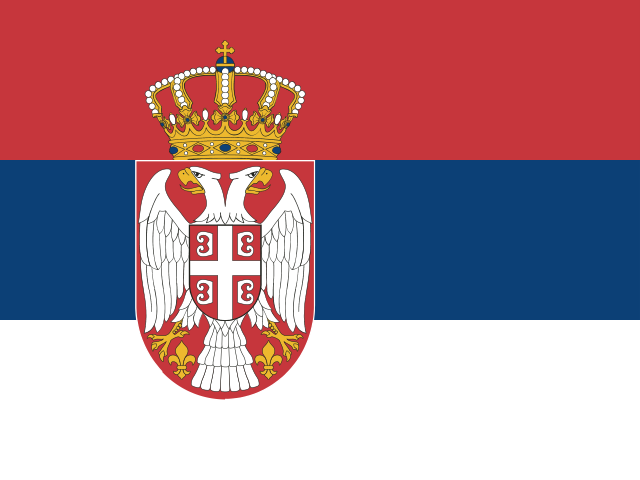 Crime and safety warnings for Serbia
Current safety guidance for Serbia from UK Foreign Office travel advice. We cover 1 city in Serbia, with reported scams for each.
Crime and safety warnings for Serbia
Current safety guidance for Serbia from UK Foreign Office travel advice. We cover 1 city in Serbia, with reported scams for each.
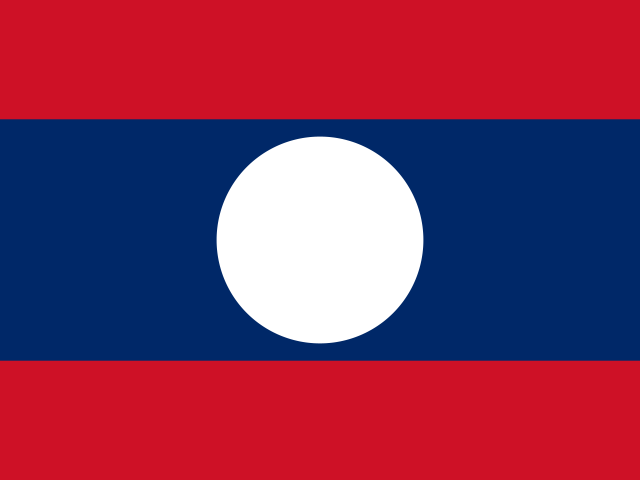 Crime and safety warnings for Laos
Current safety guidance for Laos from UK Foreign Office travel advice. We cover 1 city in Laos, with reported scams for each.
Crime and safety warnings for Laos
Current safety guidance for Laos from UK Foreign Office travel advice. We cover 1 city in Laos, with reported scams for each.