 Kenya
Kenya
US State Department travel advisories · 28 July 2026
Current safety guidance for Kenya from US State Department travel advisories. We cover 1 city in Kenya, with reported scams for each.
Source: Kenya - Level 2: Exercise Increased Caution — US State Department travel advisories
Source: U.S. Department of State. A work of the U.S. federal government, in the public domain.
in Kenya due to risk of crime, kidnapping, terrorism, unrest, health, and traffic safety. Some areas have increased risk. Read the entire Travel Advisory.
CrimeViolent crime can occur at any time. Violent crimes include armed carjacking, mugging, home invasion, sexual assault, and kidnapping for ransom. Petty crime is common. Criminal fraud targeting Americans is a concern.
Terrorists plot kidnappings, bombings, grenade attacks, armed assaults, suicide attacks, and other action in Kenya. Terrorists attack without warning. They have targeted:
Medical services in Kenya are limited. They are often unavailable in rural areas.
Some schools, substance abuse centers, and other facilities claim to rehabilitate people, but operate with little or no government supervision.
Automobile accidents are one of the main causes of injury and death of Americans in Kenya.
 Crime and safety warnings for Morocco
Current safety guidance for Morocco from UK Foreign Office travel advice. We cover 2 cities in Morocco, with reported scams for each.
Crime and safety warnings for Morocco
Current safety guidance for Morocco from UK Foreign Office travel advice. We cover 2 cities in Morocco, with reported scams for each.
 Crime and safety warnings for Nigeria
Current safety guidance for Nigeria from UK Foreign Office travel advice. We cover 1 city in Nigeria, with reported scams for each.
Crime and safety warnings for Nigeria
Current safety guidance for Nigeria from UK Foreign Office travel advice. We cover 1 city in Nigeria, with reported scams for each.
 Panama is at Level 2: exercise increased caution
Current safety guidance for Panama from US State Department travel advisories. We cover 1 city in Panama, with reported scams for each.
Panama is at Level 2: exercise increased caution
Current safety guidance for Panama from US State Department travel advisories. We cover 1 city in Panama, with reported scams for each.
 Crime and safety warnings for Colombia
Current safety guidance for Colombia from UK Foreign Office travel advice. We cover 3 cities in Colombia, with reported scams for each.
Crime and safety warnings for Colombia
Current safety guidance for Colombia from UK Foreign Office travel advice. We cover 3 cities in Colombia, with reported scams for each.
 Crime and safety warnings for Serbia
Current safety guidance for Serbia from UK Foreign Office travel advice. We cover 1 city in Serbia, with reported scams for each.
Crime and safety warnings for Serbia
Current safety guidance for Serbia from UK Foreign Office travel advice. We cover 1 city in Serbia, with reported scams for each.
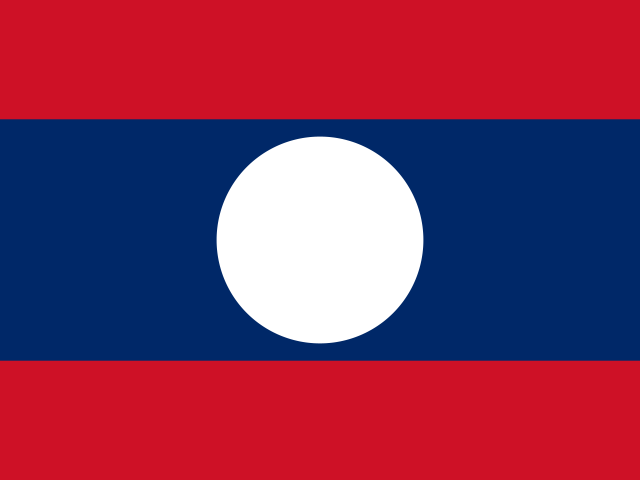 Crime and safety warnings for Laos
Current safety guidance for Laos from UK Foreign Office travel advice. We cover 1 city in Laos, with reported scams for each.
Crime and safety warnings for Laos
Current safety guidance for Laos from UK Foreign Office travel advice. We cover 1 city in Laos, with reported scams for each.